

We Shall Overcome
The Unyielding Power of Cultural Resistance

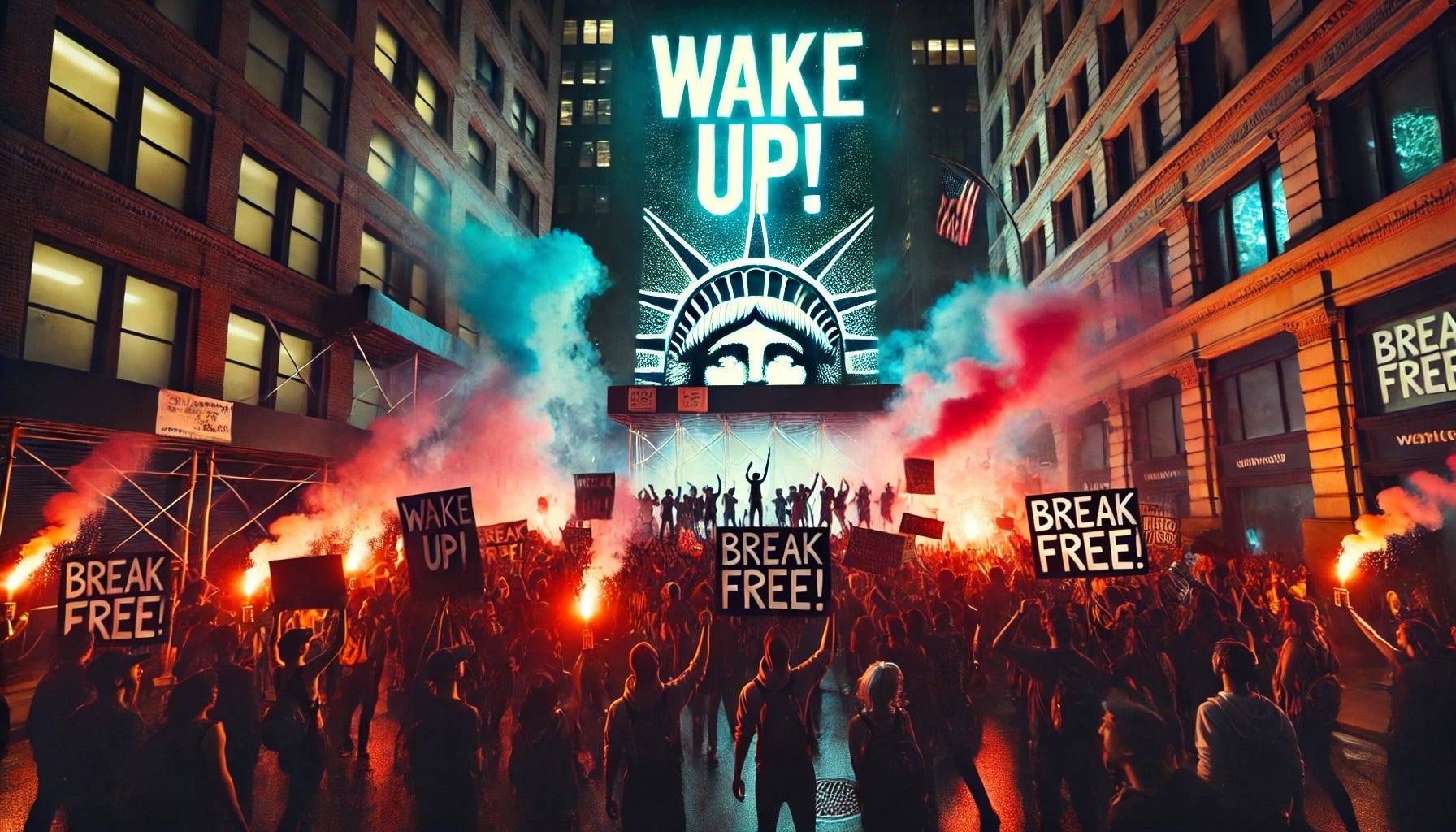
Throughout history, art has been a powerful warrior against oppression. I write this because I feel a dark hour approaching America.
I come from a country that spent sixty years under the Soviet rule and paid for it with its prosperity and broken spine. What ultimately saved us from the Russian mouth was not economic or military genius, but an awakened narrative of human dignity and freedom. A narrative about who the Czechs historically were and who they could have been again if they had found their lost pride and cohesion. It was art, not journalism, who transferred this narrative around the country and made people share their emotions and feel their common culture as one.
Unlike political rhetoric, art speaks a universal language, capable of uniting people across ideological and national boundaries. As famous Czech democratic president Václav Havel repeated countless times in his essays, in every culture, even in the most distant ones, there is a basic minimum of requirements for morality, the common good and respect to human dignity. This is precisely why oppressive regimes fear art. There are no facts to suppress in it. And yet it talks.
The Weapon
What is a narrative? It defines who we are, who we aspire to be, and what our purpose is in this world. Tyranny hijacks these narratives to seize power, manipulating them to lie about what is human pride and dignity, while art challenges and reclaims them back. In the 1960s, music became a vehicle of American resistance, shaping the consciousness of an entire generation. Protest songs from Bob Dylan, Joan Baez, and Creedence Clearwater Revival served as anthems against war and government overreach. In occupied Czechoslovakia, Karel Kryl’s poetic yet razor-sharp lyrics in protest songs exposed the brutality of the Soviet-controlled regime. These artists did not simply entertain; they ignited movements.
From Musicals to Memes
Popular culture has long played a role in disrupting authoritarian brainwash. The musical Hair (1979) is a poignant example. At its core, it tells the story of Claude, a young man from conservative Oklahoma who, upon entering the countercultural movement in New York, begins to question everything he once believed was ‘right.’ The film’s psychedelic visuals and radical messaging turned it into an anti-war parable that resonated beyond its time. Today, digital resistance has taken a different form. Internet memes and AI-generated art, like Fields of Truth by Czech Eolas or satirical reinterpretations MAGA MAN by Canadian Resistance, challenge authority in the same way underground music once did. From re-edited videos of world leaders to viral music remakes, like Martin Kerr, digital resistance has become an extension of artistic rebellion for the 21st century.
The Individual vs. The Collective Struggle
American cinema often glorifies the lone hero narrative—one outcast fighting against an evil corporation, dystopian government, or oppressive ideology. Whether cyberpunk in The Matrix, 1984, or Inglourious Bastards, these stories celebrate the individual as the agent of change.
But what about collective resistance? I miss this narrative so much in the entire American culture. Works like Václav Havel’s absurdist plays or Lope de Vega’s Fuenteovejuna offer a different vision: communities resisting together. With humor, passive resistance or with heroism. The strength of collective defiance is often underestimated, yet history shows that tyrannies crumble not at the hands of a singular hero, but through the resilience of millions of united people.
Havel’s Audience, for instance, is a hillarious critique of totalitarian absurdity. The play revolves around a conversation between Vanek, a dissident writer forced to work in a brewery, and his superior, the brewmaster, who drunkenly oscillates between sympathy and subservience to the regime. The brewmaster offers Vaněk a promotion to an easier job—on the condition that he spies on himself and writes all the reports for the secret police. The brewmaster has difficulties to write and is too lazy to do so, so he pushes the writer Vanek to write his weekly reports instead. This darkly humorous yet chillingly realistic depiction of coercion and moral compromise reflects the broader struggle between integrity and survival under oppressive systems.
Why Art Will Always Survive
Art survives every form of oppression because it is more than just an aesthetic pursuit—it is a force of unification of experience and remembrance. During revolutions, art bridges generations, ensuring that past struggles inform the battles of the future. Tyrants can ban books, censor music, and imprison artists, but they cannot erase the resonance of their work in the minds of those who have witnessed it maybe just once.
Totalitarian regimes throughout history have sought to suppress art that challenges their authority. The Soviet Union banned entire literary works, with authors like Alexander Solzhenitsyn exiled for exposing the horrors of the gulag system. In Nazi Germany, modernist and expressionist paintings were labeled as "degenerate art" and either destroyed or removed from museums. In Maoist China, the Cultural Revolution saw the persecution of writers, playwrights, and musicians whose work did not conform to the regime's ideological demands.
Czechoslovakia under communist rule was no exception. Václav Havel, a playwright and dissident, was imprisoned multiple times for his chillingly funny subversive works that criticized the regime’s hypocrisy and repression. His most notable imprisonment came after the publication of Charter 77, a human rights manifesto that challenged the state’s narrative. Yet, despite years behind bars and constant surveillance, Havel’s writings continued to inspire resistance, culminating in the Velvet Revolution and the fall of communism in Czechoslovakia.
When communist Czechoslovakia, as the last in the entire Eastern Bloc, was freed from Soviet domination, it was the music of Joan Baez, the Rolling Stones and the Czech Karel Kryl that woke people up from lethargy and depression.
Maybe it will come in handy soon, dear American friends. And I wish with all my heart that this regime would end before you really need it.
about author
Alex Alvarova is Czech-Canadian author and communication expert.
A recognized authority in political marketing and public relations, a sought-after seminar leader, facilitator, podcaster and public speaker. In 2017 she wrote The Industry of Lies, a non-fiction work that introduces, outlines and fully supports a core concept: Russia used the 2013 presidential election in the Czech Republic as a trial run to perfect its hybrid-warfare aggression for altering the outcome of the 2016 US Presidential elections. In 2021, she published Feeding The Demons: The conquerors of America, a political thriller on behavioral propaganda. She wrote numerous expert articles on political marketing and algorithmic propaganda. Together with her co-host, expert on social media algorithms, Josef Holy, she hosts a czech podcast called Canaries In The Net, on algorithmic propaganda and AI.
Thank you.
Gender affirming? Not kidding.